Renovate, Rebuild, or Buy New? The Real Decision Facing Buyers in Spring Valley and Wesley Heights
Luxury inventory in these neighborhoods is sitting on the market longer than you'd expect for homes this desirable — not because demand is soft, but because buyers here are working through a genuinely harder decision than in most parts of the city.
If you've been house-hunting in Spring Valley or Wesley Heights, you've probably noticed something: even well-priced, well-located homes are taking longer to sell than similarly priced properties elsewhere in Northwest DC. Right now, Wesley Heights luxury listings sit at a median price near $2.5 million with an average of roughly two months on market. That's not a sign buyers have lost interest. It's a sign they're taking their time on a decision that actually deserves it.
The Decision Underneath the Decision
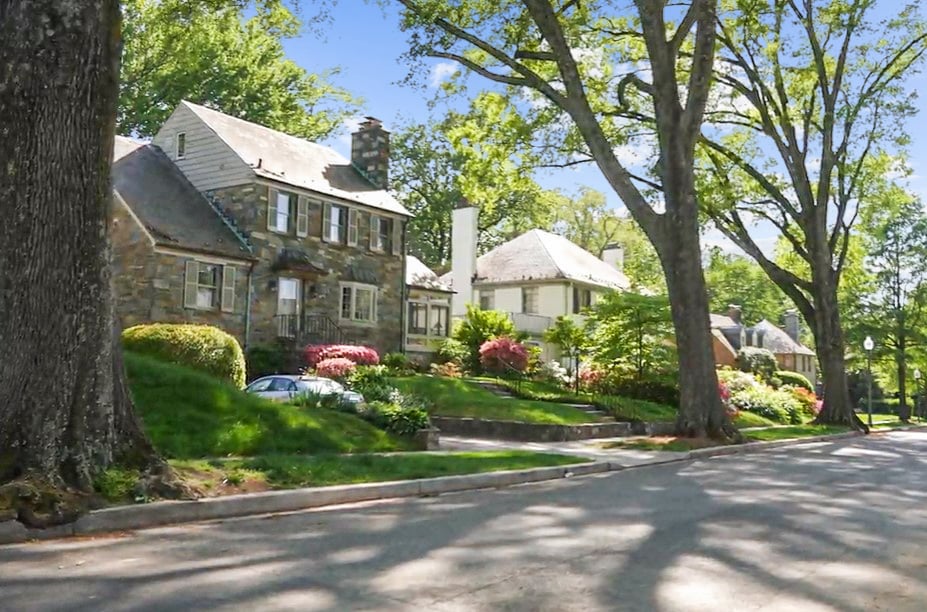
Most of the housing stock in these two neighborhoods dates to the mid-twentieth century — brick colonials, center-hall homes, Tudor and Federal-style estates on generous lots. These are genuinely good bones in genuinely good locations. But they also mean nearly every serious buyer here ends up quietly running the same three options against each other:
- Buy as-is and live with it, at least for now.
- Buy and renovate, keeping the shell and lot but modernizing the interior.
- Buy for the lot and rebuild, treating the existing structure as a placeholder for new construction.
Which one makes sense isn't obvious from the listing photos, and it's exactly why buyers here take longer to commit than buyers in neighborhoods with more move-in-ready, recently updated inventory.
Why the Lot Matters More Than the House
In Spring Valley and Wesley Heights, lot size and setback often carry more long-term value than the current condition of the house sitting on it. A dated interior on a large, well-positioned lot isn't necessarily a problem — it can be an opportunity, especially for buyers comfortable with a renovation or rebuild timeline. That's a different mindset than house-hunting in a neighborhood where the finished product is what you're paying for.
This is also why pricing in these neighborhoods has to be grounded in genuinely comparable recent sales rather than name-recognition comparisons to Georgetown or Kalorama — the value equation here runs through the land and the bones, not just the finishes.
What to Weigh If You're Buying
- Get a real renovation estimate before you fall in love with a floor plan. "Good bones" and "needs a little updating" can mean very different budgets depending on the systems, layout, and age of the structure.
- Understand teardown economics for your specific lot, if a rebuild is on the table — zoning, setback requirements, and tree protections can all affect what's actually buildable, and that varies lot by lot in these neighborhoods.
- Weigh timeline against livability. A renovation or rebuild can take a year or more. If you need to be in a home sooner, that should shape which of the three paths makes sense for you.
- Don't assume new construction is always the higher price. Depending on the property, a full rebuild can sometimes land close to — or even below — the cost of a light-touch renovation on an older estate home, once structural surprises are factored in.
What to Weigh If You're Selling
- Know which buyer you're actually selling to. A home that shows well as move-in-ready draws a different buyer than one that's clearly a renovation or rebuild candidate — and pricing and marketing strategy should reflect which one your home really is.
- Don't over-invest in cosmetic updates if your home is genuinely a rebuild candidate. Buyers at this level are sophisticated enough to see past staging when the real value is in the lot.
- Patience is normal, not a red flag. A longer days-on-market number in this segment often reflects buyers doing real due diligence, not lack of interest — don't panic-price based on a timeline built for a different kind of neighborhood.
The Bottom Line
Spring Valley and Wesley Heights reward buyers and sellers who understand that the real decision isn't "is this a good house," it's "what is this lot and structure best suited to become." Getting that right takes more than a walkthrough — it takes a clear-eyed look at renovation costs, rebuild feasibility, and your own timeline.
If you're weighing a purchase or sale in either neighborhood and want help thinking through which path actually makes sense for a specific property, let's walk through it together.